
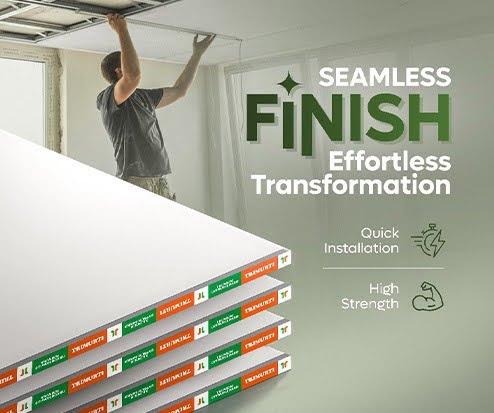
A false ceiling can completely change the appearance of an interior. It adds depth, improves lighting, conceals wiring, and creates a more polished finish. However, an attractive ceiling is not only about design. Its durability, safety, maintenance requirements, and suitability for the space depend heavily on the materials used during construction.
Whether the project involves a residential renovation, office interiors, retail space, or a commercial development, choosing the right ceiling system is essential. From a gypsum board ceiling to traditional plaster-based finishes, every material has specific advantages and limitations that should be considered before installation.
Why Material Selection Matters
Ceilings are exposed to factors such as humidity, temperature changes, vibrations, lighting fixtures, and regular maintenance activity. If unsuitable materials are selected, problems such as cracks, sagging, stains, and surface damage may develop over time.
The right ceiling material should offer a balance of:
- Strength and stability
- Smooth finishing
- Moisture resistance
- Fire performance
- Ease of installation
- Maintenance convenience
- Design flexibility
- Long-term value
A material that works well in a bedroom may not be suitable for a bathroom, kitchen, office, or high-traffic commercial space.
Understanding Gypsum Board Ceilings
A gypsum board ceiling is widely used in modern interiors because it offers a clean appearance and flexible design possibilities. Gypsum boards are relatively lightweight and can be used to create straight, layered, recessed, curved, or suspended ceiling designs.
They are commonly preferred for:
- Homes and apartments
- Corporate offices
- Hotels
- Retail outlets
- Restaurants
- Educational institutions
- Commercial buildings
Gypsum board systems also make it easier to integrate lighting, air-conditioning vents, electrical wiring, and decorative elements into the ceiling design.
Benefits of Gypsum-Based Ceiling Systems
Gypsum boards offer several practical advantages when installed correctly. Their smooth surface allows for a refined finish, while their lightweight nature reduces unnecessary structural load.
Other benefits include:
Design Flexibility
Gypsum can be shaped into different patterns and levels, making it suitable for contemporary and creative interiors.
Fast Installation
Compared with certain traditional construction methods, gypsum systems can often be installed more quickly with less mess.
Smooth Finish
The surface can be finished and painted to create a seamless appearance.
Easy Integration
Lighting fixtures, speakers, ventilation systems, and concealed wiring can be incorporated into the design.
Repair Convenience
Individual sections can often be accessed or repaired without dismantling the entire ceiling.
Is Gypsum Always the Best Material?
The best material for false ceiling depends on the room’s conditions, design goals, budget, and performance requirements. Gypsum is a strong option for many indoor applications, but it may not be ideal for every environment.
For areas exposed to constant moisture, specialised moisture-resistant boards or alternative materials may be more appropriate. Similarly, spaces requiring specific fire-resistance or acoustic performance should use materials designed for those requirements.
Before making a decision, consider:
- Room humidity
- Ceiling height
- Structural conditions
- Lighting requirements
- Maintenance access
- Fire-safety expectations
- Budget
- Expected lifespan
Choosing based only on appearance can lead to avoidable maintenance issues.
The Role of Plaster-Based Finishing
Plaster-based finishes remain popular because they provide a smooth and durable surface when applied by skilled professionals. They can be used for decorative details, ceiling borders, mouldings, cornices, and customised interior features.
Plaster finishes are particularly useful when the design requires:
- Decorative patterns
- Ornamental details
- Smooth surface correction
- Cornices and mouldings
- Custom ceiling elements
- Traditional or premium finishes
The final quality depends significantly on the material consistency, surface preparation, and workmanship.
Why POP Is Still Used in Interior Design
Plaster of Paris, commonly known as POP, is often selected for decorative ceiling work because it is easy to mould and shape. It can create intricate designs and is frequently used for borders, recessed patterns, ceiling accents, and ornamental features.
When considering trimurti expert pop, users should evaluate the product’s suitability for the intended application, ease of mixing, setting behaviour, smoothness, and finishing quality. The right POP product can help professionals achieve detailed designs while maintaining a clean and refined appearance.
Common Ceiling Installation Mistakes
Even high-quality materials may fail when installation practices are poor. Common mistakes include:
- Installing materials on damp surfaces
- Ignoring structural movement
- Using incorrect framing
- Failing to maintain proper spacing
- Overloading the ceiling
- Skipping surface preparation
- Using unsuitable finishing compounds
- Poor joint treatment
- Ignoring ventilation requirements
Professional installation and adherence to product instructions are essential for long-term performance.
Balancing Beauty with Functionality
A false ceiling should complement the room’s design without compromising practical use. Excessively complex designs may make maintenance difficult or reduce ceiling height unnecessarily.
A functional ceiling plan should account for:
- Light placement
- Air-conditioning flow
- Access panels
- Electrical maintenance
- Fire-safety equipment
- Room proportions
- Cleaning requirements
Simple, well-planned designs often provide better long-term value than overly complicated structures.
Choosing Reliable Ceiling Materials
Quality materials contribute to better finishing, improved durability, and reduced repair requirements. Buyers should review product specifications, application recommendations, storage requirements, and compatibility with the intended surface.
A reliable supplier should also provide technical guidance to contractors and interior professionals. This helps ensure that the material is used correctly and performs as expected.
Conclusion
A strong and attractive false ceiling requires more than an appealing design. Material selection, surface preparation, installation quality, and long-term performance all influence the final result. Whether choosing a gypsum board ceiling, evaluating the best material for false ceiling, or selecting a reliable POP solution such as Trimurti Expert POP, every project should be planned according to its specific requirements. Trimurti provides construction and finishing materials that support durable, refined, and practical interior solutions.