
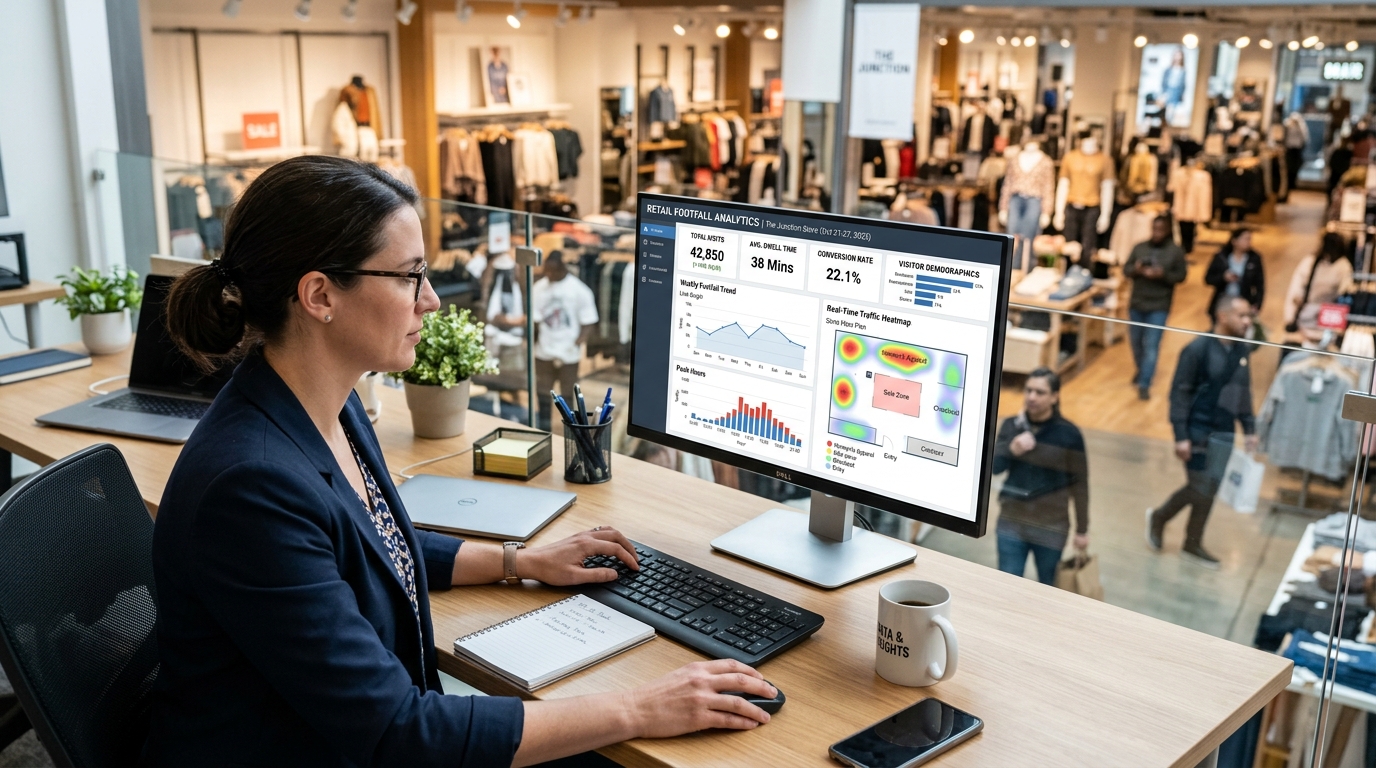
Introduction to Retail Footfall Analytics for Better Sales and Customer Engagement
Retail Footfall Analytics for Better Sales and Customer Engagement is becoming a core strategy for modern retail businesses that want to stay competitive in a data-driven market. With Retail Footfall Analytics for Better Sales and Customer Engagement, retailers can understand how customers move inside a store, which areas attract the most attention, and what influences purchasing decisions.
Retail Footfall Analytics for Better Sales and Customer Engagement helps businesses move beyond traditional guesswork and rely on real behavioral data. By using Retail Footfall Analytics for Better Sales and Customer Engagement, retailers can improve store performance, increase conversions, and build stronger relationships with customers.
In today’s competitive environment, Retail Footfall Analytics for Better Sales and Customer Engagement is not optional—it is essential. Businesses that implement Retail Footfall Analytics for Better Sales and Customer Engagement gain a significant advantage in understanding customer behavior at a granular level.
Understanding Retail Footfall Analytics for Better Sales and Customer Engagement
Retail Footfall Analytics for Better Sales and Customer Engagement focuses on tracking customer movement patterns and analyzing in-store behavior. This includes how long customers stay in specific zones, which products they interact with, and how they navigate through the store.
Retail Footfall Analytics for Better Sales and Customer Engagement provides retailers with actionable insights that can be used to redesign layouts, improve signage, and optimize product placement. When businesses rely on Retail Footfall Analytics for Better Sales and Customer Engagement, they can make smarter operational decisions based on real-time data.
Retail Footfall Analytics for Better Sales and Customer Engagement also helps identify peak traffic hours and customer density patterns, enabling retailers to better plan staffing and resource allocation.
How Retail Footfall Analytics for Better Sales and Customer Engagement Improves Sales Performance
Optimizing Product Placement
Retail Footfall Analytics for Better Sales and Customer Engagement plays a critical role in improving product visibility. By analyzing movement heatmaps, retailers can place high-demand products in high-traffic areas. This increases the chances of impulse buying and boosts overall revenue.
Retail Footfall Analytics for Better Sales and Customer Engagement ensures that every inch of retail space is used effectively. Products that require attention can be strategically positioned based on insights from Retail Footfall Analytics for Better Sales and Customer Engagement.
Increasing Conversion Rates
One of the key benefits of Retail Footfall Analytics for Better Sales and Customer Engagement is its ability to increase conversion rates. When retailers understand how customers interact with the store environment, they can optimize layouts and displays accordingly.
Retail Footfall Analytics for Better Sales and Customer Engagement helps identify weak zones where customers pass by without engaging. These areas can then be improved to encourage interaction and improve sales outcomes.
Retail Footfall Analytics for Better Sales and Customer Engagement and Customer Engagement Strategies
Enhancing In-Store Experience
Retail Footfall Analytics for Better Sales and Customer Engagement provides deep insights into customer behavior, allowing retailers to create more engaging shopping environments. By studying traffic flow, businesses can reduce congestion and improve navigation.
Retail Footfall Analytics for Better Sales and Customer Engagement helps ensure that customers have a smooth and enjoyable shopping experience, which directly improves satisfaction and loyalty.
Personalizing Customer Interaction
Retail Footfall Analytics for Better Sales and Customer Engagement also enables more personalized engagement strategies. By understanding customer movement patterns, retailers can tailor promotions and in-store messaging more effectively.
This level of personalization driven by Retail Footfall Analytics for Better Sales and Customer Engagement helps businesses build stronger emotional connections with customers.
Role of AI in Retail Footfall Analytics for Better Sales and Customer Engagement
Artificial Intelligence has significantly enhanced the capabilities of Retail Footfall Analytics for Better Sales and Customer Engagement. AI systems can process large volumes of video data in real time, making insights more accurate and actionable.
At Horus AI Vision Analytics, Retail Footfall Analytics for Better Sales and Customer Engagement is powered by advanced AI models that analyze CCTV feeds without requiring additional hardware. This allows retailers to implement Retail Footfall Analytics for Better Sales and Customer Engagement quickly and cost-effectively.
AI-driven Retail Footfall Analytics for Better Sales and Customer Engagement can also predict future customer behavior based on historical trends. This predictive capability helps retailers plan staffing, marketing campaigns, and inventory more efficiently.
Using Retail Footfall Analytics for Better Sales and Customer Engagement for Store Optimization
Improving Store Layout Design
Retail Footfall Analytics for Better Sales and Customer Engagement helps retailers design more efficient store layouts. By understanding where customers spend most of their time, businesses can position key products in strategic locations.
Retail Footfall Analytics for Better Sales and Customer Engagement also highlights underutilized areas of the store that can be improved to increase engagement.
Aligning Staffing with Customer Traffic
Another important application of Retail Footfall Analytics for Better Sales and Customer Engagement is workforce optimization. By analyzing traffic peaks, retailers can ensure that enough staff are available during busy hours.
Retail Footfall Analytics for Better Sales and Customer Engagement reduces both overstaffing and understaffing, leading to improved efficiency and cost savings.
Key Benefits of Retail Footfall Analytics for Better Sales and Customer Engagement
Retail Footfall Analytics for Better Sales and Customer Engagement offers several key benefits, including improved sales performance, better customer engagement, and optimized operational efficiency. It allows retailers to make informed decisions based on real customer behavior rather than assumptions.
Retail Footfall Analytics for Better Sales and Customer Engagement also enhances marketing effectiveness by identifying which store areas generate the most interaction. This ensures that promotional efforts are more targeted and impactful.
Implementing Retail Footfall Analytics for Better Sales and Customer Engagement in Retail Stores
To successfully implement Retail Footfall Analytics for Better Sales and Customer Engagement, businesses must integrate analytics tools with existing CCTV systems. This allows seamless data collection without major infrastructure changes.
Retail Footfall Analytics for Better Sales and Customer Engagement also requires continuous monitoring and analysis. Retailers must regularly review insights to adapt to changing customer behavior and market conditions.
Training staff to understand Retail Footfall Analytics for Better Sales and Customer Engagement is also essential. When employees understand the data, they can make better decisions that improve store performance.
Conclusion
Retail Footfall Analytics for Better Sales and Customer Engagement is a powerful tool that helps retailers transform raw customer movement data into actionable business insights. By leveraging Retail Footfall Analytics for Better Sales and Customer Engagement, businesses can optimize store layouts, improve staffing efficiency, and enhance overall customer experience.